
Extruded acrylic sheet is a transparent plastic sheet formed continuously through an extrusion process, mainly made from polymethyl methacrylate (PMMA). It features high transparency, light weight, a smooth surface, and easy processability.
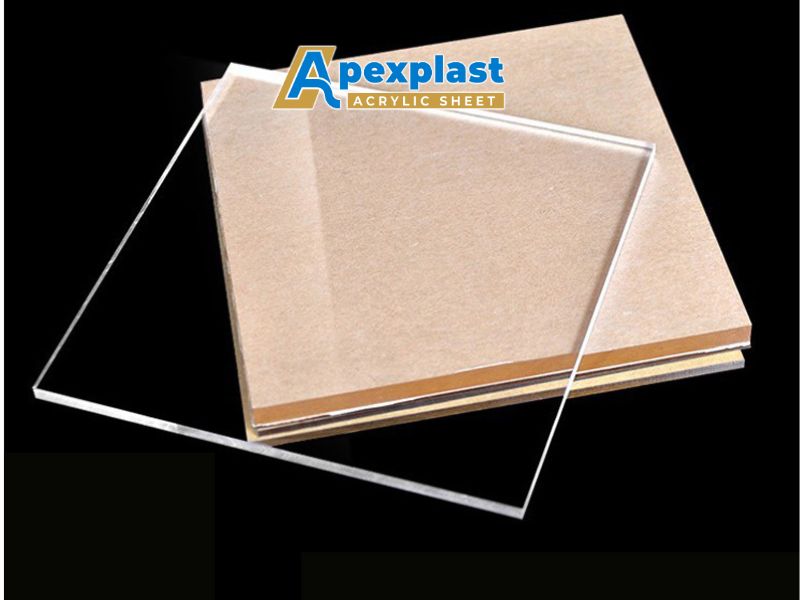

Extruded acrylic sheet is one of the most widely used types of acrylic sheet.
At Apexplast, as an acrylic sheet factory working closely with distributors and fabricators, we often explain this process to clients. Because understanding production helps you choose the right material, not just the cheapest one.
This is a practical look at how extruded acrylic sheet is produced, from raw material to finished panels.
Apexplast
What Is Extruded Acrylic Sheet, Really?
Step 1: Raw Material Preparation
Everything starts with PMMA pellets. Virgin or blended, depending on product grade.
At Apexplast, we focus on stable raw material sourcing. Poor pellets lead to bubbles, haze, or brittle sheets. Good pellets make the whole process smoother. Literally.
The pellets are dried before extrusion. Moisture is a problem. Even a small amount can create defects inside the acrylic sheet.
Step 2: Melting and Extrusion
The dried PMMA pellets go into an extruder. Inside, screws heat and push the material forward. The plastic becomes a thick, flowing melt.
This melt is pushed through a flat die. The die determines:
Sheet width
Initial thickness profile
Surface quality
This is where an acrylic sheet factory shows its technical strength. Die design, temperature control, and screw speed must match perfectly. If not, thickness varies, stress increases, and quality drops.
At Apexplast, extrusion parameters are monitored continuously. Not once a day. Constantly.
Step 3: Calendering and Thickness Control
After exiting the die, the molten acrylic sheet passes through calender rollers. These rollers control final thickness and surface flatness.
This step is critical for:
Thickness tolerance
Optical clarity
Surface smoothness
A professional acrylic sheet factory invests heavily in roller systems. Cheaper lines often produce sheets that look fine, but measure uneven. Fabricators notice this immediately.
Step 4: Cooling and Stress Control
Once shaped, the acrylic sheet must cool. Cooling is not just about speed. It is about stress.
If cooling is too fast, internal stress remains in the sheet. That leads to cracking during cutting or bending. If too slow, productivity drops.
Apexplast balances cooling profiles based on thickness and grade. This is one reason our extruded acrylic sheet performs well in CNC and laser cutting.
Step 5: Protective Film and Cutting to Size
After cooling, protective film is applied on both sides of the acrylic sheet. This protects against scratches and dust.
Then the sheet is cut into standard sizes or customized dimensions.
Common sizes:
1220 × 2440 mm
1220 × 1830 mm
Custom large format panels
A flexible acrylic sheet factory can adjust size, thickness, and film type for different markets.
Why Extruded Acrylic Sheet Quality Depends on the Factory
Two extruded acrylic sheets may look identical. Same thickness, same clarity. But performance can differ.
The difference comes from:
Raw material grade
Extruder precision
Thickness control system
Cooling process
Quality inspection
In an acrylic sheet factory, these are not marketing words. They are daily production challenges. Apexplast invests in stable lines and trained operators. Because one unstable batch can damage long-term trust.
 *
*
Submit
| 
You can contact us through the following methods: Cell / Whatsapp:+86 17317689345 E-mail : info@apexplast.net Telephone : +86-21-50318416 / 50318414 Add: Room 2212-2216,22nd Floor, No.58 Jinxin Road,Pudong New District, Shanghai, China
|
