

Why Is It Called Cast Acrylic Sheet?
Apexplast
Many customers ask us the same question.
Why is it called cast acrylic sheet?
Does anyone actually “cast” it?
The short answer is yes. And not in a symbolic way. It truly involves pouring liquid material into a mold and letting it become solid sheet.
As an experienced acrylic sheet factory, Apexplast believes it’s better to explain this process clearly instead of hiding behind industry jargon. Once you understand how cast acrylic sheet is made, the name makes complete sense.
Let’s walk through it from a manufacturing point of view.
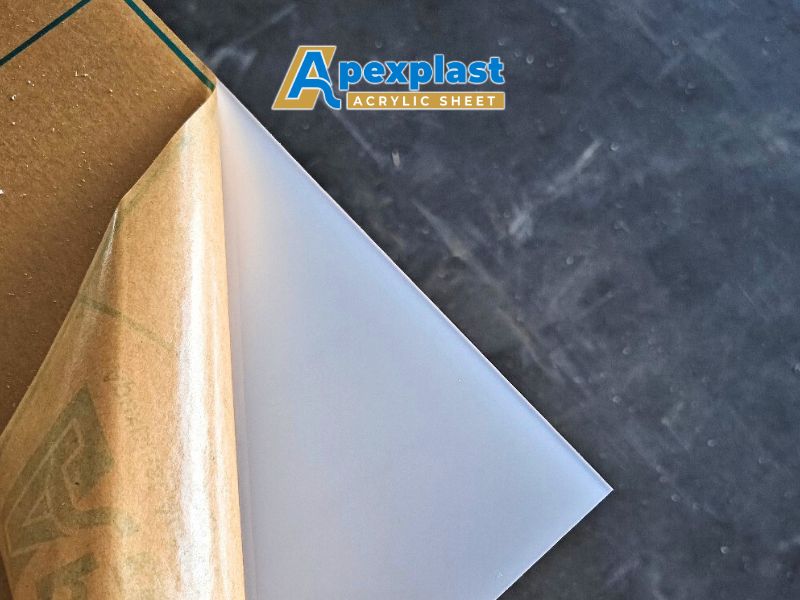
What Does “Cast” Really Mean in Cast Acrylic Sheet?
Unlike extruded acrylic sheet, cast acrylic sheet does not start with melted plastic pellets pushed through a machine.
The process begins much earlier — at the chemical level.
Inside an acrylic sheet factory like ours, production starts with MMA (methyl methacrylate) monomer. This is a clear liquid. Not solid. Not plastic yet.
Here is what happens:
The MMA liquid is carefully formulated with additives.
The liquid mixture is poured between two precisely aligned glass molds.
Inside this sealed mold, a chemical polymerization reaction takes place.
The liquid slowly transforms into solid PMMA.
After curing, the sheet is removed.
Then trimmed, cut, polished. Final inspection. Packed.
Liquid → mold → reaction → solid sheet.
That is casting.
The formation happens directly inside the mold. No forced shaping through rollers. No high-pressure extrusion screw pushing it forward. The acrylic sheet is created where it lies.
This is why it is called cast acrylic sheet.
Why Use the Word “Cast”?
The word “cast” comes from metal casting — cast iron, cast steel. The logic is the same.
Liquid material is poured into a mold.
It cools or reacts.
It becomes solid in that shape.
Cast acrylic sheet follows the same manufacturing philosophy, just with polymer chemistry instead of molten metal.
From a technical standpoint, this production method allows the molecular chains to form more naturally and with less mechanical stress. And that detail matters. Especially in demanding applications.
Cast Acrylic Sheet vs Extruded Acrylic Sheet
As an acrylic sheet factory, we often explain the difference between cast and extruded acrylic sheet. The confusion is understandable.
The core difference is not just price. It is the way the acrylic sheet is formed.
Cast Acrylic Sheet
Liquid MMA polymerizes inside the mold
Longer molecular chains
Lower internal stress
Better thickness tolerance options
More suitable for thick acrylic sheet production
Extruded Acrylic Sheet
Solid pellets melted and pushed through a die
Continuous high-speed production
More cost-efficient for thin sheets
Higher internal stress due to mechanical stretching
In simple terms, cast acrylic sheet feels more “natural” in structure. Extruded acrylic sheet is more industrially efficient.
Neither is right or wrong. It depends on application. But understanding the difference helps buyers make better decisions.
Why High-End Applications Prefer Cast Acrylic Sheet
Many premium projects specify cast acrylic sheet. Not because it sounds better. Because performance matters.
Cast acrylic sheet typically offers:
Better optical clarity
Stronger resistance to chemical exposure
Lower internal stress
Improved CNC machining performance
Cleaner laser cutting edges
Applications that benefit from cast acrylic sheet include:
Thick acrylic sheet carving
Luxury display cases
Museum-grade showcases
Precision optical components
High-end retail fixtures
Custom fabricated acrylic sheet structures
In these environments, small imperfections are visible. Internal stress can cause cracks later. Surface stability matters.
As an acrylic sheet factory focused on long-term cooperation, Apexplast pays attention to these details. Because your finished product depends on the stability of our acrylic sheet.
Internal Stress: A Quiet but Important Factor
When acrylic sheet contains high internal stress, problems may not appear immediately. They show up later.
After laser cutting.
After drilling.
After exposure to alcohol-based cleaners.
After temperature changes.
Stress cracks. Edge fractures. Warping.
Cast acrylic sheet, when properly produced and slowly cured, tends to have lower residual stress. That is one reason why many fabricators prefer cast acrylic sheet for demanding fabrication work.
At Apexplast, stress control is part of the production discipline. Not marketing language. It comes from raw material selection, curing time control, and strict inspection standards inside our acrylic sheet factory.
What Defines a Reliable Acrylic Sheet Factory?
Not every acrylic sheet factory operates at the same level.
Consistent acrylic sheet quality requires:
Stable MMA raw material sourcing
Controlled casting environment
Precision mold alignment
Adequate curing time (no shortcuts)
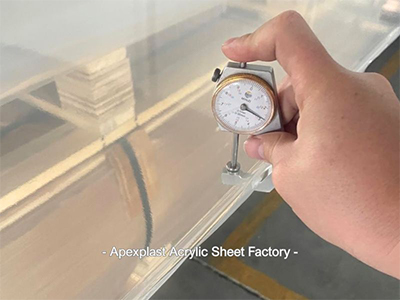
Thickness calibration
Surface inspection under proper lighting
Controlled packing to prevent warping
These are not visible in product photos. But they define whether an acrylic sheet performs well in real use.
Apexplast operates as a dedicated acrylic sheet factory in China, focusing on both cast acrylic sheet and other PMMA sheet solutions. We understand that global buyers are not only purchasing plastic sheets. They are choosing supply stability. Risk reduction. Long-term cooperation.
From Factory Floor to Global Projects
Our acrylic sheet products are used in:
Advertising signage systems
Exhibition and display fabrication
Interior decorative panels
Protective barriers
Architectural glazing alternatives
Custom acrylic fabrication projects
Some clients prioritize cost. Some prioritize machining stability. Others need thick cast acrylic sheet for specialty applications.
Instead of pushing one solution, we listen first.
That is how real cooperation starts.
Why the Name Matters
So when someone asks, “Why is it called cast acrylic sheet?”
The answer is simple.
Because it is cast.
Liquid MMA is poured into a mold and polymerized into solid acrylic sheet. The name comes from the process itself. Not from marketing creativity.
Understanding production gives confidence in material selection. And informed decisions lead to better finished products.

Let’s Build Something Stable Together
If you are sourcing acrylic sheet, whether cast acrylic sheet or extruded acrylic sheet, choosing the right acrylic sheet factory makes a difference.
Apexplast is ready to support your projects with consistent quality, transparent communication, and practical manufacturing knowledge.
Tell us your thickness, size, application.
We will respond with honest suggestions.
Send your inquiry today and let’s discuss how our acrylic sheet can support your next project.
Cell / Whatsapp:+86 17317689345
E-mail : info@apexplast.net
Telephone : +86-21-50318416 / 50318414
Add: Room 2212-2216,22nd Floor, No.58 Jinxin Road,Pudong New District, Shanghai, China
 *
*
Submit
| 
You can contact us through the following methods: Cell / Whatsapp:+86 17317689345 E-mail : info@apexplast.net Telephone : +86-21-50318416 / 50318414 Add: Room 2212-2216,22nd Floor, No.58 Jinxin Road,Pudong New District, Shanghai, China
|
